New Capitals

Background
Meeting climate targets ultimately depends on concrete emissions reduction on the ground. In Asia, clean energy deployment continues to accelerate and cross-border industrial collaboration keeps deepening. Yet when technology and capital from East Asian exporting countries enter Southeast Asian markets, they still have to clear multiple hurdles before they become real projects and reach scale. These include policy and regulation, project finance, market connections, local adaptation, and turning demand into procurement. Breakdowns can happen at every step, from identifying project opportunities and understanding local rules, to finding partners and adapting technical solutions, to securing procurement and scaling up. The key question is how to organize and connect demand, technology, capital, and local resources more effectively.
Building on this observation, Abundant Climate Action Institute and Impact Hub Shanghai carried out an interview-based study of the cross-border clean energy collaboration ecosystem in Asia. The study focused on four markets: China (an exporter of technology and delivery capacity), South Korea (an exporter of engineering capacity and public finance), Indonesia (a destination market for clean energy solutions), and Singapore (a regional financial hub). Drawing on an ecosystem mapping and interviews with frontline practitioners, the study examined the supply and demand dynamics in each market and the practical challenges facing cross-border clean energy collaboration between East Asia and Southeast Asia.
Industry interviewees came from all four countries. They included clean energy project developers, EPC contractors, O&M service providers, solar PV manufacturers, and companies working in energy storage, e-mobility, and hydrogen. They ranged from major industry players to SMEs, micro enterprises, and startups. The study also covered the service ecosystem, including law firms, incubators, industry matchmaking platforms, specialist media and think tanks, industry associations, and outbound business service providers. On the investment side, it covered early-stage venture capital, impact investors, blended finance platforms, and large investment platforms.
The study was conducted primarily as an internal strategic reference. We thank all the partners, interviewees, and advisors who supported and took part in this work.

On October 7, Abundant Climate Action Research Institute shared key insights from this research at Bangkok Climate Action Week 2026 (BKKCAW). Together with Renewable First, New Energy Nexus, and Agora Energiewende, Abundant Climate co-hosted a dialogue titled “From Markets to Manufacturing: Accelerating Clean Energy Technology Transfer in Asia.” The session brought together manufacturers, investors, civil society organizations, and innovation ecosystem players to discuss how Asian clean energy technology can move beyond market deployment toward local manufacturing, capacity building, and cross-border industrial cooperation.

Li Yan, Executive Director of Abundant Climate, sharing the key findings of the study
Below, we share the key insights and reflections from the study with our industry partners.
The study found that different markets play different supply and demand roles in regional clean energy cooperation. China and South Korea have strong technology, manufacturing, and engineering capabilities. Chinese companies’ overseas expansion is driven more by domestic competition and policy support, while Korean companies are driven by carbon neutrality targets, regional competition, and commercial opportunity. Indonesia has steadily growing energy demand and needs external capital, technology, and equipment. Singapore, through low-carbon electricity imports, green finance, and regional connectivity, serves as a node that links demand and resources for cross-border projects.
At the same time, each company’s own resources, capabilities, and commercial goals shape how it takes part in cross-border cooperation. Chinese SOEs and large Korean companies are better positioned to take on large projects. Large private companies focus more on clear commercial opportunities and adapting to local markets. SMEs and startups rely more heavily on external funding, market information, local networks, and customer channels. As different market conditions overlap with the needs of different types of companies, firms face different barriers and support needs in entering markets, advancing projects, and scaling up.
The study looked beyond how companies enter new markets. It sought to identify the key gaps along the path from market entry and project development to financing and scaled deployment, and to understand what market services, financing support, and cooperation mechanisms different types of companies and projects need to move forward more smoothly.
Key Insights #1:
From “Does the Technology Exist?” to “How Does the Technology Actually Get Deployed?”
A recurring view in our interviews and industry research is that the main difficulty in East Asia–Southeast Asia clean energy cooperation is not simply a shortage of technology, capital, or market demand. It is that these resources are scattered across different actors and stages, and are hard to bring together into concrete projects that keep moving. Obstacles can arise at every step, from entering a market and finding local partners, to project finance and technical adaptation, to securing procurement and scaling up.
The study identified five major barriers.
First, policy and regulatory uncertainty makes market entry and project financing harder. This is mainly an issue in destination markets. Tariff volatility, opaque procurement processes, long permitting timelines, regulatory uncertainty, and institutional arrangements such as power purchase agreements that are not bankable can all significantly raise the cost and risk of entering a local market. For foreign companies, the challenge is not only knowing what the policies are. It is also understanding how the rules work, finding a path to entry, and coordinating multiple parties to move a project forward.
Representative of a Chinese solar PV manufacturer expanding overseas Solar is a capital-intensive business. To get financing, you first need relatively stable policy and revenue expectations. But in Indonesia, project approvals and permitting take a long time, and PPA requirements are stricter than the standards companies usually work with. Projects also carry local content requirements ranging from 20% to 60%, while the local supply chain is not yet complete or stable. All of this adds to project costs and uncertainty. On top of that, there are no preferential policies for solar financing and interest rates are high. It is very hard for companies to estimate project costs and returns at the early stage, which makes financing and project delivery even harder.
Second, there is a mismatch between capital and projects, especially a lack of funding for first commercial projects and mid-sized projects. Companies may be constrained by their home country’s policies on overseas project finance and outbound investment, and they also have to manage currency risk. Multilateral finance and impact investment often come with high entry thresholds that SMEs struggle to meet. Meanwhile, some mid-sized projects fall into a “missing middle” between venture capital and large infrastructure finance. First commercial projects in particular lack financing tools that can absorb early-stage risk.
Representative of a Chinese energy EPC contractor expanding overseas Chinese companies are going abroad faster, but financial and investment support has not fully caught up. Domestic banks are generally cautious and have a limited appetite for models that use the project itself as the basis for financing, while overseas markets tend to rely more on project finance. This gap is something that will need to be closed.
Third, there are too few trusted market intermediaries, making it hard for companies to build effective local connections. For SMEs, the challenges lie in finding reliable local partners, getting trustworthy market information, and reaching customers and business networks. Without mature market intermediaries, even companies with the right technology may struggle to identify real project opportunities, or may have to spend heavily just to understand the local regulatory and business environment.
Representative of a small Chinese company expanding overseas There are many local partners, but most of them are small, which drives up coordination costs.
Fourth, there is still a gap between entering a market and truly localizing. Some cross-border projects have entered local markets but still rely heavily on home country networks and have not become part of the local industrial ecosystem. Technologies developed for other markets may also not fit local infrastructure, use cases, cost conditions, or customer needs. Localization therefore means more than getting a product into the market. It also means adapting technical solutions, partnership networks, and a company’s internal decision-making and professional support systems.
Representative of a Chinese domestic energy industry association Entering a local market does not mean you have truly become part of it. Understanding the local business culture and building trusted partnerships are part of localization.
Representative of a cross-border legal services firm Many companies have entered overseas markets, but the corporate functions that hold key authority, such as contract approval, remain at headquarters. Overseas teams find it hard to move projects forward on their own. Headquarters staff also often have limited English abilities and limited experience with cross-border professional communication, so dealing directly with local law firms and accounting firms is difficult. As a result, companies still tend to go through Chinese service providers first and then connect with local partners. This shows that companies have “gone global,” but their internal professional support and decision-making systems have not yet fully localized.
Fifth, demand has not yet fully turned into procurement, and there is a break between pilots and scaled deployment. The existence of energy transition demand does not mean it will automatically become projects and procurement. In Indonesia, cheap coal, the existing energy system, and weak policy incentives can all reduce companies’ motivation to adopt renewable energy. In Singapore, some companies have already run innovation pilots, but innovation teams and pilot projects are not yet firmly connected to core business procurement systems, so moving from pilot to regular procurement remains difficult.
Representative of an Indonesian think tank On one hand, Indonesia is trying to attract clean energy investment. On the other, coal prices are still protected by policy, and new energy projects face local content requirements and grid connection constraints. As a result, coal power remains cheaper and easier in the short term, while renewables carry higher entry costs and more uncertainty.
Key Insights #2:
What Market Services and Cooperation Mechanisms Are Needed?
In response to these gaps, the study points to four directions worth pursuing further.
In Southeast Asian destination markets, start from existing demand and clear drivers to find use cases that can actually become projects. Priority should go to demand that already has policy or commercial momentum, such as AI data centers, Singapore’s low-carbon electricity imports, the industrial captive power market, and industrial decarbonization supported by EVs and BESS. The aim is to turn latent transition demand into clearer project and procurement needs.
Build cross-border market intermediation services that cover the full project lifecycle. These services should especially serve SMEs and startups, offering continuous support from market entry, partner screening, and localization to pilot advancement, financing, and scaled deployment, rather than one-off matchmaking.
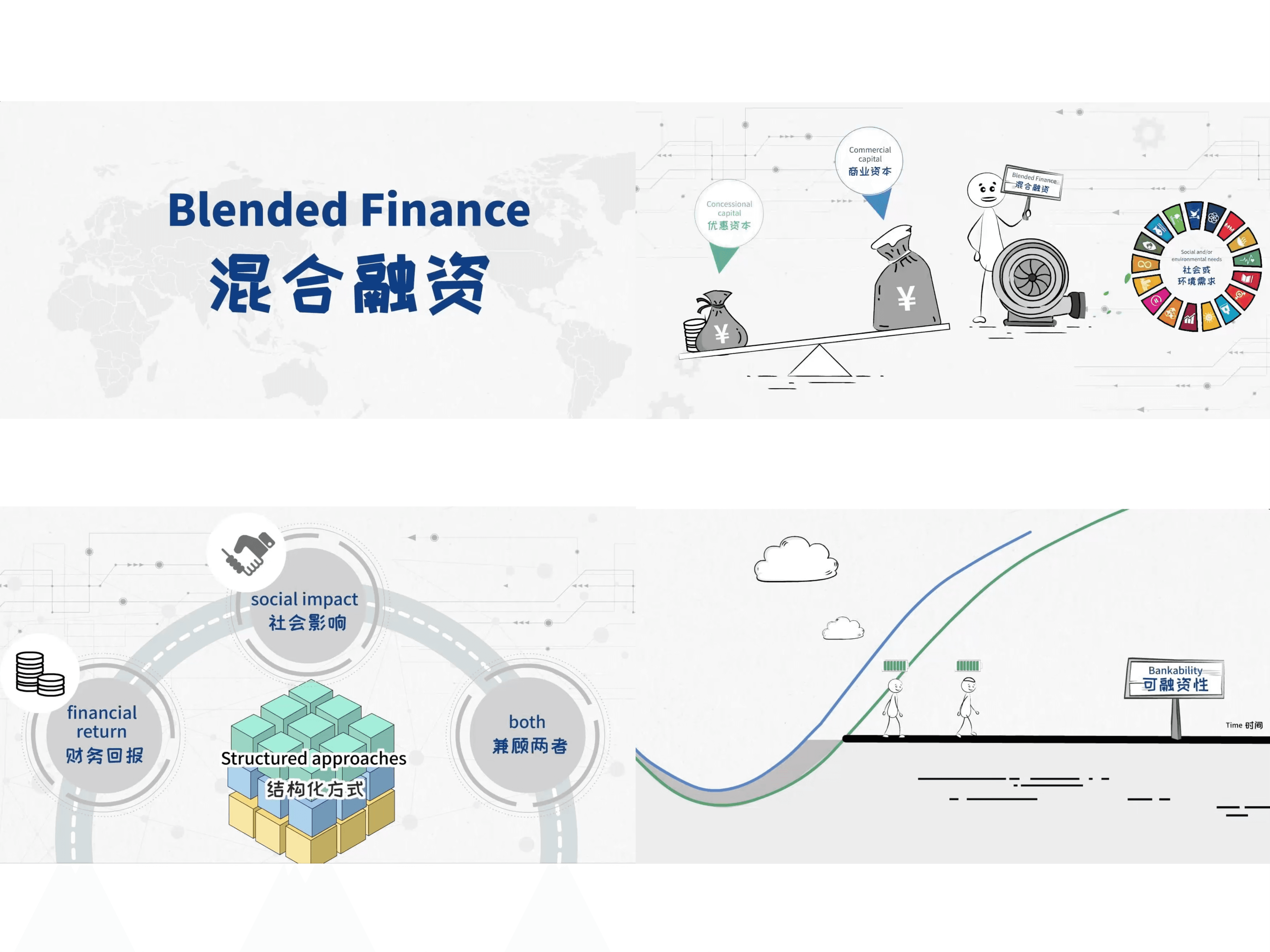
Fill the “missing middle” in financing. Tools such as blended finance, guarantees, and first-loss capital can share early-stage risk for mid-sized and first commercial projects. This can help more projects clear the financing threshold between technology validation, pilots, and commercial deployment.
Make more systematic use of philanthropic and catalytic capital. Beyond supporting individual projects, this capital can invest in foundational capacities that the market needs over the long term but that companies find hard to build alone. Examples include market intermediation platforms, project development support, risk-sharing mechanisms, and policy coordination. These create more stable market conditions for clean energy deployment.

Abundant Climate team with participants at the event
In the bigger picture, these mechanisms ultimately serve to accelerate clean energy deployment in emerging markets such as Southeast Asia and South Asia, so that more technology, capital, and solutions turn into real emissions reductions. In practical terms, the key is to provide companies with the right support and services, built around real demand, across market entry, project development, financing, local partnerships, and scaled deployment.
Going further, this support needs to gradually take shape as a market ecosystem that continuously connects demand, technology, capital, and local partners. That way, new companies and projects entering the market will not have to start from scratch every time to find partners, understand the market, and build a financing path. They can draw on existing partnership networks, professional services, and financing tools to move projects forward faster and keep expanding clean energy deployment.
Note: For in-depth conversations, all interviews were conducted one-on-one and anonymously. The full report will not be published. For exchange or collaboration inquiries, please contact the Abundant Climate team directly at info@abundantclimate.com.