New Capitals

Over the past decade, the cost of solar, batteries and other clean energy technologies has fallen sharply, and deployment across South and Southeast Asia has picked up pace. In just a few years, Pakistan imported more than 50 GW of solar modules, while countries such as India, Thailand, and Vietnam are witnessing similar growth in clean energy investments and emerging industries.
Yet rapid renewable deployment has not been translated into deep participation in the host countries' industries. Most developing economies in South and Southeast Asia continue to function primarily as technology consumers rather than active participants in technology development, manufacturing, innovation, and value creation. How to move from using technology to building industries was the core question of this event.
On 7th October 2026, during Bangkok Climate Action Week, Abundant Climate joined Renewables First, New Energy Nexus and Agora Energiewende to co-host “From Markets to Manufacturing: Accelerating Clean Energy Technology Transfer Across Asia” at Chulalongkorn University. Representatives from solar development, industry associations, policy institutions, investment and research joined the discussion.
Opening Presentations
To open the session, Siddharth Goel, Project Manager of Power System Transformation at Agora Energiewende, presented the overall landscape of emerging clean-tech industries in Southeast Asia. He outlined the opportunities for local value creation and the conditions needed to capture them.
Three presentations followed, each from a different angle. Jie Xiao, General Manager of NEX China, shared insights under the title “From Modules to Models: China’s Distributed Energy Lessons for Emerging Markets.” Li Yan, Executive Director of Abundant Climate Action Institute, drew on interviews with 50 practitioners across the region to map the gaps and constraints in cross-border low-carbon business collaboration. Sheraz Aamir of Renewables First, a Pakistani think tank, presented the case of Pak-China Green Energy Connect and shared practical lessons on building an industrial ecosystem.
Panel Discussion
The panel was moderated by Basit Ghauri, Project Manager at Renewables First. Panelists came from policy research, project development, investment and industry associations, and held an in-depth discussion on tech transfer, storage, capital and grids.

From left to right: Basit Ghauri, Tisha-Nok Kreka, Michael Morris, Lu Qi, Siwakorn Rojpaisarnkit
Tech transfer is more than building factories
The discussion opened with a basic question: what does successful tech transfer look like? Tisha-Nok Kreka, Project Manager for Energy Markets and Policy at Agora Energiewende, explained that tech transfer moves step by step. It starts with assembly and manufacturing, builds up engineering and product design capability, and ultimately leads to indigenous innovation. Thailand is a good example. It already has deep experience in automotive assembly and is now absorbing more advanced technology through the EV industry. Behind this are decades of tech transfer from Japanese and German carmakers and a mature automotive supply chain.
Thailand’s experience in consumer electronics can carry over as well. Engineering skills from hard disk drives can move into power electronics, and semiconductor manufacturing experience can extend into EV control systems. To move further up the value chain, however, the country still needs to strengthen electrochemistry capability and invest in new skills training. Siwakorn Rojpaisarnkit, Business Development Manager at Yude Solar, added that from his experience on the ground, building a local industrial base depends on strong local communities and local partners.
Will storage follow the solar path?
The conversation then turned to the fast-growing storage market. Pakistan has deployed solar at scale without developing local manufacturing. Will batteries go down the same road? Michael Morris, Director at the Global Solar Council (GSC), said battery manufacturing is indeed concentrating as solar did, but there is still room for local capability and local production. The key is that quality assurance must extend all the way to the end customer, and a clear responsible party must be identifiable when something goes wrong. Manufacturers, installers and operators need clearly divided warranty responsibilities and a clear local point of contact.
On the trade-off between affordability and local value creation, the panelists agreed that both need to advance together. First, deployment must stay affordable, because market demand is already there. Second, local value should be created where there is a commercial case, by entering segments with comparative advantage rather than competing head on with leading manufacturing capacity.
Investors value policy consistency
From the perspective of investors and Chinese companies, Qi Lu, Partner at Tsing Capital and CEO of Q2 Global, explored the role of capital in tech transfer. She noted that tech transfer is usually not a top consideration for investors, but it matters greatly to host countries, so it should be guided through regulation and policy incentives. Sudden policy changes in host countries are one of the main risks foreign companies face.
Capital and company models are also changing. More and more Chinese companies are setting up subsidiaries or new ventures in Southeast Asia, bringing experience from their home market into new markets, and founding teams are increasingly diverse. Sometimes technology moves through new factories, and sometimes through new ventures. Financial institutions of all kinds, including Chinese banks, are an important part of this financing picture.
The grid is the next hurdle
Having covered manufacturing and capital, the discussion moved to the power system itself. Pairing solar with storage shifts the core question from how much power is generated to how it connects to the grid. DER integration, demand response and system visibility have only entered the policy agenda in Southeast Asia in the past year or two. Capturing the full value of these resources requires infrastructure such as smart meters and smart inverters.
The panelists noted that the difficulty lies not only in technology but in the institutions responsible. In Thailand, the Electricity Generating Authority of Thailand (EGAT), which handles transmission, and the distribution utilities sit in separate systems. Developing distributed energy requires them to share data and coordinate, but the current division of roles stands in the way. Distribution utilities, for example, are not responsible for frequency regulation. New market mechanisms are therefore needed to bring grid companies and independent power producers on board. As more market players enter, platforms are also needed to connect institutions and companies with different roles.
Priorities Outcomes
To close, the moderator asked each panelist for the one priority outcome they would most like to see. Three main points emerged.
Develop realistic tech transfer roadmaps. Industrial clusters, trained engineers and test facilities need to be in place first. Countries can start with assembly and operations, gradually build standards and testing capability, and set concrete targets, such as training a set number of engineers in one segment within three years, before moving towards co-development and product design. At the same time, current policy focuses too heavily on manufacturing while recycling and material recovery are overlooked. With a wave of battery retirements on the way, this deserves serious attention.
Accelerate grid development. According to Michael Morris, the global target is about 11 TW of clean energy capacity by 2030, around 8 TW of it from solar. On the current trajectory, solar will reach about 7 TW by then, leaving a gap of about 1 TW. Cost and supply are no longer the main constraints. The real bottlenecks are grid policy, regulatory frameworks and grid connection mechanisms.
Bring in more diverse capital, especially capital that treats tech transfer as part of its mission.
Co-creation Workshop
In the second half of the event, participants from China, the Philippines, Thailand, Pakistan and elsewhere split into groups around three questions. First, how can countries build mechanisms for continuous cross-country learning and cooperation? Second, what conditions are needed within markets to move from technology trade to technology partnerships and local capability development? Third, what intermediary mechanisms and enabling services can turn cross-border clean energy business opportunities into scalable, financeable pipelines and partnerships?
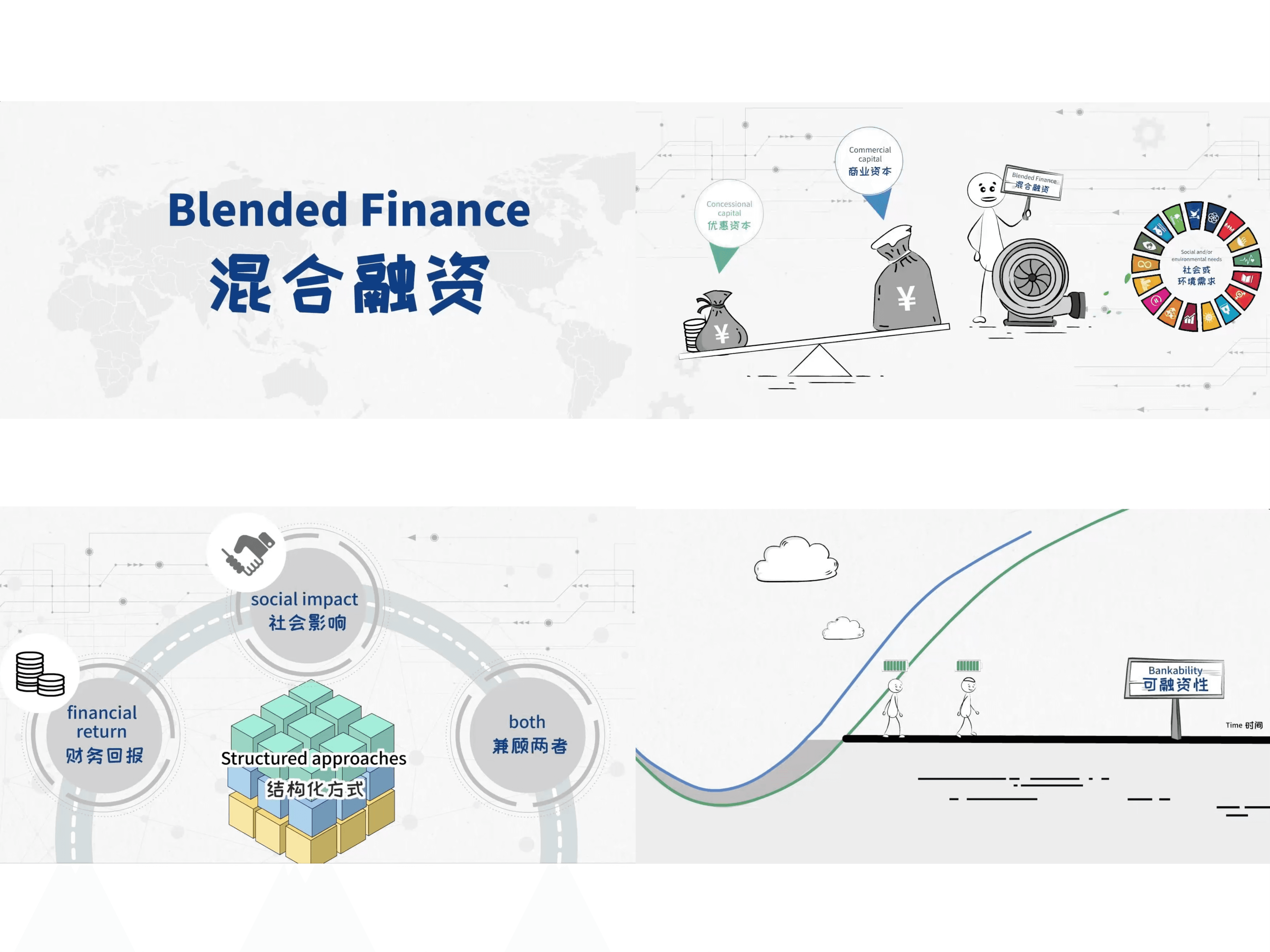
Abundant Climate facilitated the co-creation session on the third question, which focused on deal-level bottlenecks. In the Philippines, for example, local banks do not understand the solar business and international institutional investors look only at large projects, leaving SMEs and household projects in a long-standing financing gap. To advance cross-border clean energy deals in Southeast and South Asian markets, participants proposed several directions: building regional blended finance mechanisms and guarantee mechanisms for SMEs; raising local banks’ understanding of solar projects; creating a due diligence framework and installer certification system suited to small and medium projects; and aggregating scattered small projects into portfolios that investors are willing to take on. Who should lead these mechanisms remains an open question. Participants also agreed on the need for a long-term cross-border exchange platform that shares not only successes but also, candidly, the real difficulties each market is facing.
Closing Thoughts
The afternoon’s discussion pointed to one conclusion. Cost and capacity are no longer the main bottlenecks. What is really holding the industry back is grids, financing channels, standards and trust. Moving from market to manufacturing takes more than new capacity. It takes a set of support mechanisms that let small and medium projects get financed and new technology get deployed smoothly.
Abundant Climate will continue advancing research on cross-border low-carbon collaboration. Working with partners, we will focus on real transaction cases and solution options in key Southeast Asian markets and sectors, and turn these discussions into concrete mechanisms and action.
For exchange or collaboration inquiries, please contact the Abundant Climate team directly at info@abundantclimate.com.